A well-seasoned cast iron pan is one of the joys of a home kitchen: eggs slide, steaks sear with a deep crust and cleanup takes a minute. A dull, rusty or sticky pan, on the other hand, can make you want to give up on cast iron altogether. The fix is almost always the same, and it is easy once you know it. Here is exactly how to season cast iron at home, whether you are breaking in a new skillet or rescuing a flea-market find.
This guide walks through the oven method that cookware makers recommend, explains which oils work best and why, and covers the everyday habits that keep seasoning strong. You will also find the mistakes that cause sticky or flaking pans, plus answers to the questions people search most often.
What You Need to Season Cast Iron
- A cast iron skillet, griddle or Dutch oven (bare, not enameled)
- Hot water, a stiff brush or chainmail scrubber and mild dish soap
- Lint-free cloths or paper towels
- A neutral, high smoke point oil or shortening
- Aluminum foil or a sheet pan for the lower oven rack
- An oven and about one to two hours
What Seasoning Actually Is
Seasoning is not a coating you buy; it is a layer you create. When a thin film of fat is heated past its smoke point, it goes through a chemical change called polymerization and bonds to the iron as a hard, slick, dark surface. Every time you cook with fat, you add a little more. That is why old pans are so black and smooth, and why learning how to season cast iron properly pays off for decades.
Best Oils to Season Cast Iron
| Oil | Best for | Key feature |
|---|---|---|
| Vegetable shortening | Classic oven seasoning | Inexpensive and forms an even layer |
| Canola or vegetable oil | Everyday maintenance | Neutral flavor, easy to find |
| Grapeseed oil | Smooth, hard finish | High smoke point |
| Avocado oil (refined) | Very high oven temperatures | One of the highest smoke points |
| Flaxseed oil | Experienced users only | Very hard finish, but can flake |
| Seasoning sprays and pastes | Convenience | Thin, even application |
Most makers, including Lodge, suggest a simple vegetable oil or shortening. The most important factor is not the brand of oil but how thinly you apply it.
How to Season Cast Iron in the Oven: Step by Step
This is the method to use for a new pan, a pan that has lost its seasoning or a pan you have just stripped of rust. If your skillet only looks a little dry, skip to the stovetop touch-up later in this guide.
Step 1: Preheat the Oven
Set your oven to 450 to 500°F. Place a sheet of foil or a sheet pan on the lower rack to catch any drips. A hot oven is essential because the oil needs to pass its smoke point to polymerize.
Step 2: Scrub the Pan
Wash the skillet with hot water, a little mild soap and a stiff brush. If there is rust, scrub it away with steel wool until you see bare gray metal. This is the one time aggressive scrubbing is a good idea.
Step 3: Dry It Completely
Towel the pan dry, then set it on a burner over low heat for a few minutes until every trace of moisture is gone. Water trapped in the pores of the iron leads to rust and patchy seasoning.
Step 4: Apply a Very Thin Layer of Oil
Add about a teaspoon of oil and rub it over every surface: the inside, the outside, the handle and the rim. Then take a clean cloth and wipe it all off as if you made a mistake. The pan should look almost dry. This is the step that decides whether you season cast iron well or end up with a sticky mess.
Step 5: Bake Upside Down
Place the pan upside down on the middle rack so any excess oil drips away instead of pooling. Bake for one hour. It may smoke a little, so turn on the vent fan.
Step 6: Cool in the Oven
Turn the oven off and let the pan cool inside. This gradual cooling helps the new layer cure and protects the iron from sudden temperature changes.
Step 7: Repeat for a Stronger Finish
One round gives you a protective base. Three to five rounds give a deep, even, semi-gloss finish. If you are restoring a bare pan, repeat the oil, wipe and bake cycle several times before cooking anything delicate like eggs.
The Quick Stovetop Touch-Up
You do not need the oven every time. After washing and drying your pan, set it over medium heat, add a few drops of oil and rub it in with a folded paper towel held in tongs. Keep heating until the surface looks dry and just starts to smoke, then turn off the burner. Doing this after most uses is the easiest way to season cast iron little by little.
How to Season Cast Iron Through Cooking
The best seasoning comes from simply cooking. In the first few weeks, choose fatty foods that build the layer quickly: bacon, shallow-fried chicken, sautéed onions, cornbread and roasted vegetables tossed in oil. Save long simmers of tomato sauce, wine braises and delicate fish for later, once the surface is established.
Tools That Make Cast Iron Care Easier
You only need a few inexpensive tools to care for a pan for life. A classic pre-seasoned skillet is the place to start if you do not own one yet, and a chainmail scrubber removes stuck-on food without stripping seasoning. Compare more pans in our full guide to the best cast iron skillets.
Lodge Pre-Seasoned Cast Iron Skillet, 10.25 Inch
- Pre-seasoned with vegetable oil
- Made in the USA
- Works on all cooktops and in the oven
- A classic first cast iron pan
Lodge Pre-Seasoned Cast Iron Skillet 3-Piece Set
- 8, 10.25 and 12-inch skillets
- Pre-seasoned and ready to cook
- Made in the USA
- Covers every everyday job
Mistakes to Avoid When You Season Cast Iron
- Using too much oil. Thick layers do not fully polymerize, leaving a tacky, sticky surface. Always wipe off the excess.
- Baking at too low a temperature. Below the oil’s smoke point, it simply turns gummy instead of curing.
- Seasoning a wet pan. Any moisture under the oil causes rust spots and uneven color.
- Soaking or using the dishwasher. Both strip seasoning and invite rust.
- Choosing flaxseed oil without practice. It creates a very hard layer, but many cooks find it can flake off later.
- Seasoning enameled cast iron. Enameled pans from brands like Le Creuset and Staub do not need seasoning at all.
How to Fix Common Seasoning Problems
Sticky Surface
Your pan has extra oil that never cured. Bake it upside down at 450°F for another hour, with no added oil. It should come out dry and smooth.
Rust Spots
Scrub the rust with steel wool, rinse, dry on the stove, then follow the full oven method above. A little rust is never the end of a cast iron pan.
Flaking Black Bits
Flakes usually mean a thick, brittle layer of old seasoning is lifting. Scrub the loose areas away and season the pan again with thin coats.
Food Still Sticks
Preheat the pan for longer and add enough fat. Cast iron needs a few minutes to heat evenly, and cold food dropped into a cold pan will grab no matter how good the seasoning is.
Everyday Care Routine
Once you know how to season cast iron, keeping it in shape takes about two minutes. Clean the pan while it is still warm, using hot water and a brush. A drop of mild soap is fine. Dry it right away, warm it on the stove, wipe on a thin film of oil and store it somewhere dry with a paper towel inside if you stack other pans on top. Cast iron also pairs beautifully with the slow-cooking pieces in our guide to the best Dutch ovens.
How to Season Cast Iron Griddles, Dutch Ovens and Vintage Finds
Griddles and Grill Pans
Flat griddles follow the same oven method, but ridged grill pans need extra attention because oil collects in the grooves. Use a small brush to spread the oil, then wipe each ridge with a cloth before baking. Bake upside down so nothing pools between the ridges.
Bare Cast Iron Dutch Ovens
Season the pot and the lid separately, both upside down, and remember the inside of the lid, which collects steam and is the first place rust appears. If your Dutch oven is enameled, skip seasoning entirely and simply wash and dry it.
Vintage and Thrifted Pans
Old skillets from brands like Griswold and Wagner often have smooth, machined surfaces under years of grime. Strip the old buildup with an oven cleaner or a long soak in a vinegar and water solution (no more than an hour, then scrub and rinse well), dry immediately and season with several thin coats. A restored vintage pan can be one of the most rewarding projects for anyone learning to season cast iron.
Camping Cookware
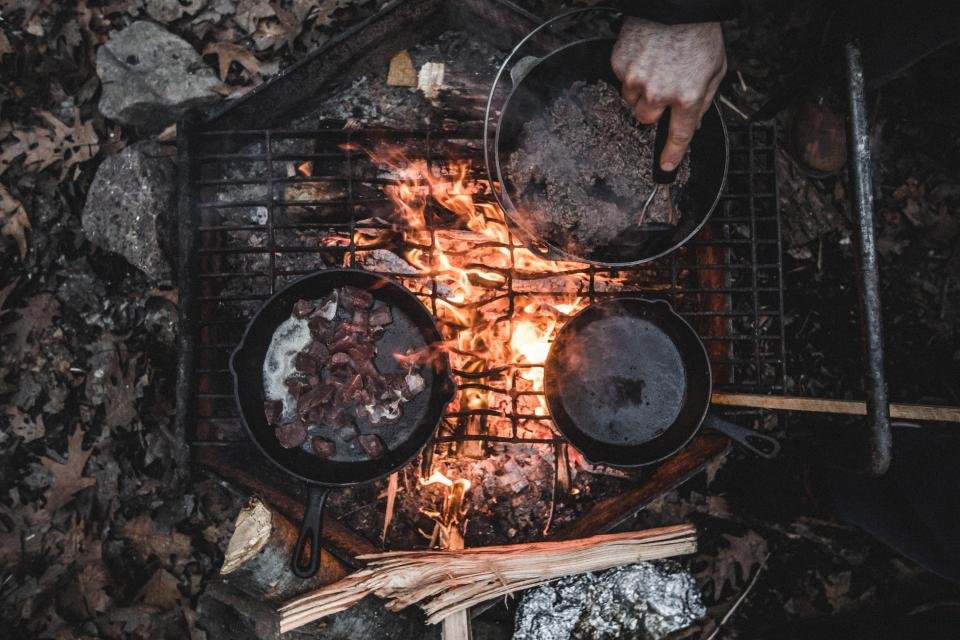
Campfire heat is uneven and outdoor storage is damp, so give camp pans an extra coat of seasoning before each trip and pack them with a paper towel to absorb moisture. Wipe them out with hot water at the campsite and warm them over the coals until dry.
Cast Iron Seasoning Myths, Busted
Myth: You Can Never Use Soap
Old lye-based soaps could strip seasoning, but modern dish soap is mild. A small drop will not undo a well-cured surface. What does real damage is soaking a pan or leaving it wet.
Myth: More Oil Means Better Seasoning
The opposite is true. Thick coats turn gummy and attract dust. When you season cast iron, the goal is a film so thin the pan looks almost dry before it goes into the oven.
Myth: Pre-Seasoned Pans Are Finished
Factory seasoning is a strong starting point, not the final layer. Every time you cook with fat, you season cast iron a little more, which is why a pan used daily keeps getting better.
Myth: Cast Iron Cannot Handle Tomatoes
A well-established surface handles a quick tomato sauce just fine. Long, acidic simmers can wear new seasoning, so wait until your pan is dark and slick before making a slow-cooked marinara in it.
Myth: Rust Means the Pan Is Ruined
Rust is only on the surface. Scrub it away, dry the pan thoroughly and season cast iron again with the oven method. Within an hour or two, the pan is ready to cook.
FAQ: How to Season Cast Iron
How often should I season cast iron?
A quick stovetop oiling after most uses is enough for daily maintenance. A full oven seasoning is only needed for new, stripped or rusty pans, or a few times a year if the surface looks dull.
What temperature should I use to season cast iron?
Most cooks use 450 to 500°F for one hour. The goal is to heat the oil past its smoke point so it can polymerize into a hard layer.
Do pre-seasoned skillets need seasoning?
No, they are ready to cook. However, adding a few extra coats at home and cooking fatty foods early on will build a slicker surface faster.
Can I use olive oil to season cast iron?
Extra virgin olive oil has a lower smoke point and can turn sticky, so it is not ideal for oven seasoning. It is perfectly fine for cooking in a seasoned pan.
Final Thoughts
Learning how to season cast iron is really about one rule: thin layers, high heat and a dry pan. Follow the oven method once, cook with a little fat, and dry your skillet after every wash, and it will grow darker and slicker every month. If you are ready for a new pan, start with our best cast iron skillets guide, and round out your kitchen with our favorite cookware sets.