For centuries, women who wanted to paint or sculpt faced closed doors. They were often barred from art academies, discouraged from studying the nude figure and left out of the history books once they were gone. Yet the most famous women artists found ways to train, work and win recognition anyway, and today museums around the world are celebrating them with major exhibitions.
In this guide we introduce twelve famous women artists from the Renaissance to the twentieth century, explaining who they were, what they created and where you can see their work. Every detail is drawn from museum collections, established art history and well documented records, so you can explore their stories with confidence.
Famous Women Artists at a Glance
- Sofonisba Anguissola: Renaissance portraitist at the Spanish court
- Artemisia Gentileschi: Baroque master of dramatic storytelling
- Angelica Kauffman: Founding member of the Royal Academy
- Élisabeth Vigée Le Brun: Portraitist to Marie Antoinette
- Berthe Morisot: Founding Impressionist
- Mary Cassatt: American Impressionist in Paris
- Hilma af Klint: Pioneer of abstract painting
- Georgia O’Keeffe: Mother of American modernism
- Tamara de Lempicka: Icon of Art Deco portraiture
- Frida Kahlo: Mexico’s most famous self portraitist
- Barbara Hepworth: Modernist sculptor
- Louise Bourgeois: Creator of the giant spider sculptures
The 12 Most Famous Women Artists in History
These famous women artists are presented roughly in chronological order, so you can see how opportunities for women slowly widened over five centuries.
1. Sofonisba Anguissola (c. 1532–1625)
Born into a noble family in Cremona, Italy, Sofonisba Anguissola received an unusually thorough education in painting. Her lively portraits of her sisters, including “The Chess Game” (1555), brought her fame, and she was invited to the Spanish court of King Philip II, where she served as a painter and lady in waiting to the queen. She paved the way for the famous women artists who followed.
2. Artemisia Gentileschi (1593–c. 1656)
Trained by her father, the painter Orazio Gentileschi, Artemisia became one of the most accomplished painters of the Baroque era. In 1616 she became the first woman admitted to the Accademia delle Arti del Disegno in Florence. Her powerful paintings of heroines, such as “Judith Slaying Holofernes”, combine dramatic light with remarkable psychological intensity.
3. Angelica Kauffman (1741–1807)
The Swiss born painter Angelica Kauffman was a celebrated Neoclassical artist in London and Rome. In 1768 she was one of two women among the founding members of the Royal Academy of Arts in London, alongside the flower painter Mary Moser. Her history paintings and portraits were admired across Europe.
4. Élisabeth Vigée Le Brun (1755–1842)
Élisabeth Vigée Le Brun painted Queen Marie Antoinette many times and was admitted to the French Royal Academy in 1783. When the Revolution began she left France and worked successfully across Europe, from Rome to Saint Petersburg. Her memoirs remain a vivid record of her era and her extraordinary career.
5. Berthe Morisot (1841–1895)
Berthe Morisot exhibited in the first Impressionist exhibition in Paris in 1874 and took part in almost all of the group’s shows. Her loose, luminous brushwork captured domestic life, gardens and the women around her. She is one of the founding figures of Impressionism and among the most famous women artists of the nineteenth century.
6. Mary Cassatt (1844–1926)
American born Mary Cassatt moved to Paris and was invited by Edgar Degas to exhibit with the Impressionists. She is best known for her tender scenes of mothers and children and her innovative colour prints, influenced by Japanese woodblocks. She also helped American collectors acquire Impressionist works, shaping museum collections in the United States.
7. Hilma af Klint (1862–1944)
The Swedish painter Hilma af Klint began creating large abstract paintings in 1906, years before the artists usually credited with inventing abstraction. She asked that her abstract works not be shown publicly until long after her death. When the Guggenheim Museum in New York presented her paintings in 2018 and 2019, the exhibition became the most visited in the museum’s history.
8. Georgia O’Keeffe (1887–1986)
Georgia O’Keeffe is famous for her magnified flowers, New York skyscrapers and the bones and hills of New Mexico. She became one of the leading figures of American modernism, and the Georgia O’Keeffe Museum in Santa Fe is dedicated to her work. Read more about her partnership with Alfred Stieglitz in our feature on famous artist couples.
9. Tamara de Lempicka (1898–1980)
Polish born Tamara de Lempicka became the defining portraitist of the Art Deco era in Paris. Her glossy, geometric style is captured in her famous “Self-Portrait in the Green Bugatti” (1929). If you love her look, our guide to Art Deco interior design shows how to bring the style home.
10. Frida Kahlo (1907–1954)
Frida Kahlo is now one of the most recognised artists in the world. Many of her paintings are self portraits that explore identity, pain, Mexican culture and her body after a serious bus accident in her youth. Her home in Mexico City, La Casa Azul, is now the Museo Frida Kahlo. Among famous women artists, few have had such a lasting impact on popular culture and fashion.
11. Barbara Hepworth (1903–1975)
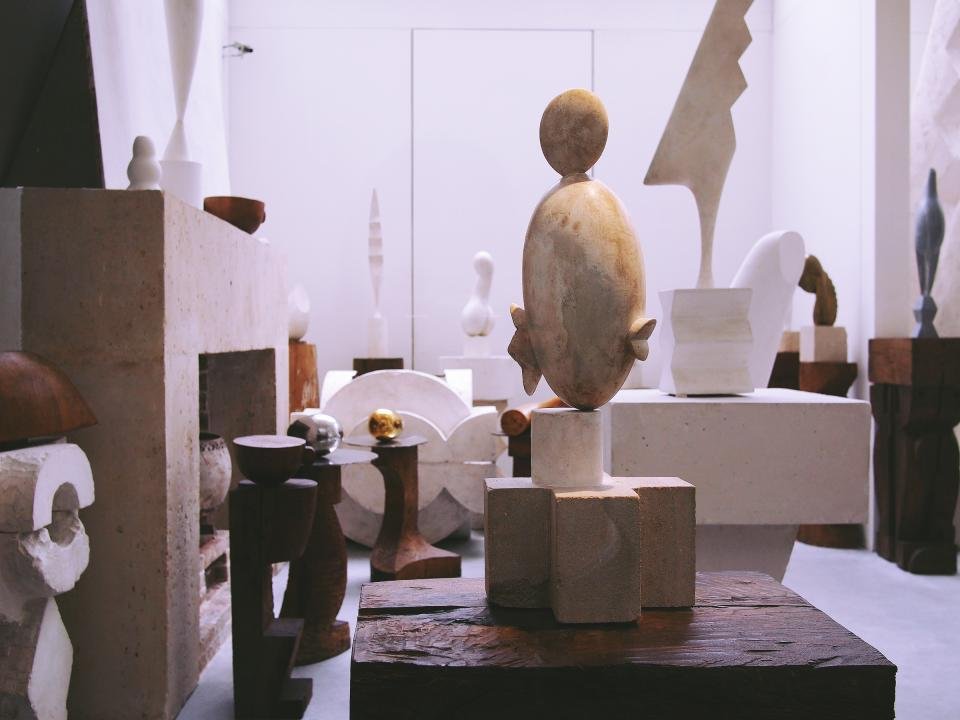
British sculptor Barbara Hepworth was a leading figure of modernist sculpture, known for pierced forms in stone, wood and bronze. Her monumental “Single Form” stands at the United Nations headquarters in New York as a memorial to Secretary-General Dag Hammarskjöld. Her studio and garden in St Ives, Cornwall, are now run by Tate.
12. Louise Bourgeois (1911–2010)
French American artist Louise Bourgeois worked for seven decades, creating sculpture, installations and prints that explore memory and family. Her giant spider sculpture “Maman”, a tribute to her mother, has been shown around the world, and one cast stands outside the Guggenheim Museum Bilbao.
More Famous Women Artists to Discover
Art history is full of names that deserve more attention. Look out for Lee Krasner, Helen Frankenthaler, Joan Mitchell, Sonia Delaunay, Edmonia Lewis, Augusta Savage, Faith Ringgold and Yayoi Kusama, all of whom changed the course of modern and contemporary art.
Books About Famous Women Artists
These books are beautifully illustrated introductions to famous women artists. Check the current price and edition on Amazon.
The Story of Art Without Men by Katy Hessel
- A history of art told through women artists
- Renaissance to today
- Engaging, accessible writing
- Over five centuries of women artists
- Large format illustrated survey
- Beautiful coffee table book
Ninth Street Women by Mary Gabriel
- Krasner, de Kooning, Hartigan, Mitchell and Frankenthaler
- Abstract Expressionism in New York
- Award winning narrative history
How We Researched This Guide
We selected these famous women artists based on their influence and their representation in major museum collections. Facts come from museum records, established art history and organisations such as the National Museum of Women in the Arts in Washington, D.C. We focus on their work and documented careers. See our editorial policy for more.
Why Famous Women Artists Were Overlooked
Limited access to training
For centuries, academies restricted women’s enrolment and banned them from life drawing classes, which were essential for history painting, the most prestigious genre. Many famous women artists, like Artemisia Gentileschi, were trained by artist fathers.
Credit given to others
Some works by women were later attributed to male contemporaries or family members. Modern research has restored many attributions.
Museums are catching up
In recent years, major institutions have staged landmark exhibitions of famous women artists, from Hilma af Klint to Artemisia, and actively expanded their collections.
How Famous Women Artists Influence Fashion and Design
The influence of famous women artists reaches far beyond gallery walls. Designers, stylists and interior decorators have borrowed from their palettes and imagery for decades.
Frida Kahlo’s signature style
Kahlo’s embroidered Tehuana dresses, flower crowns and bold jewellery have inspired runway collections and editorial shoots around the world. Her wardrobe, preserved at La Casa Azul, was the subject of the exhibition “Frida Kahlo: Making Her Self Up” at the V&A in London in 2018.
O’Keeffe’s minimalism
Georgia O’Keeffe favoured simple black and white clothing, wrap dresses and crisp shirts. Her pared back wardrobe still inspires minimalist dressing and capsule wardrobes today.
De Lempicka’s Art Deco glamour
Tamara de Lempicka’s sleek hair, metallic tones and geometric shapes continue to influence beauty campaigns, interiors and jewellery design.
Sonia Delaunay’s textiles
Sonia Delaunay designed fabrics, scarves and garments in vibrant colour blocks in the 1920s, proving that famous women artists could move effortlessly between fine art and fashion.
Where to See Their Work
- Washington, D.C.: The National Museum of Women in the Arts.
- Madrid: The Prado holds works by Sofonisba Anguissola.
- Florence: The Uffizi Galleries display Artemisia Gentileschi’s “Judith Slaying Holofernes”.
- Paris: The Musée Marmottan Monet has an important Berthe Morisot collection.
- Santa Fe: The Georgia O’Keeffe Museum.
- St Ives: The Barbara Hepworth Museum and Sculpture Garden.
Tips for Exploring Art by Women
- Look for museum trails: Many galleries now offer guides highlighting famous women artists in their collections.
- Build an art library: Our edit of the best coffee table books includes stunning art titles.
- Follow exhibitions: Check museum calendars for touring retrospectives.
- Support living artists: Visit local galleries and art fairs to discover women artists working today.
FAQ
Who is the most famous woman artist in history?
Frida Kahlo and Georgia O’Keeffe are probably the most widely recognised today, while Artemisia Gentileschi is often cited as the most important woman painter of the Baroque era.
Who was the first famous female painter?
Women painted long before the Renaissance, but Sofonisba Anguissola is often described as the first woman artist to achieve international fame in her lifetime.
Were there women Impressionists?
Yes. Berthe Morisot and Mary Cassatt both exhibited with the Impressionists, along with Marie Bracquemond.
Who painted the first abstract art?
Hilma af Klint created large abstract paintings from 1906, earlier than many artists traditionally credited with inventing abstraction.
Final Thoughts on Famous Women Artists
The stories of famous women artists are stories of talent, determination and long overdue recognition. From Sofonisba Anguissola at the Spanish court to Louise Bourgeois’s towering spiders, these women reshaped art history despite enormous obstacles. Next time you visit a museum, look for their names on the wall, and you will see the history of art in a richer light.
Discover more inspiring women in our feature on women Nobel Prize winners or learn about the origins of International Women’s Day.